
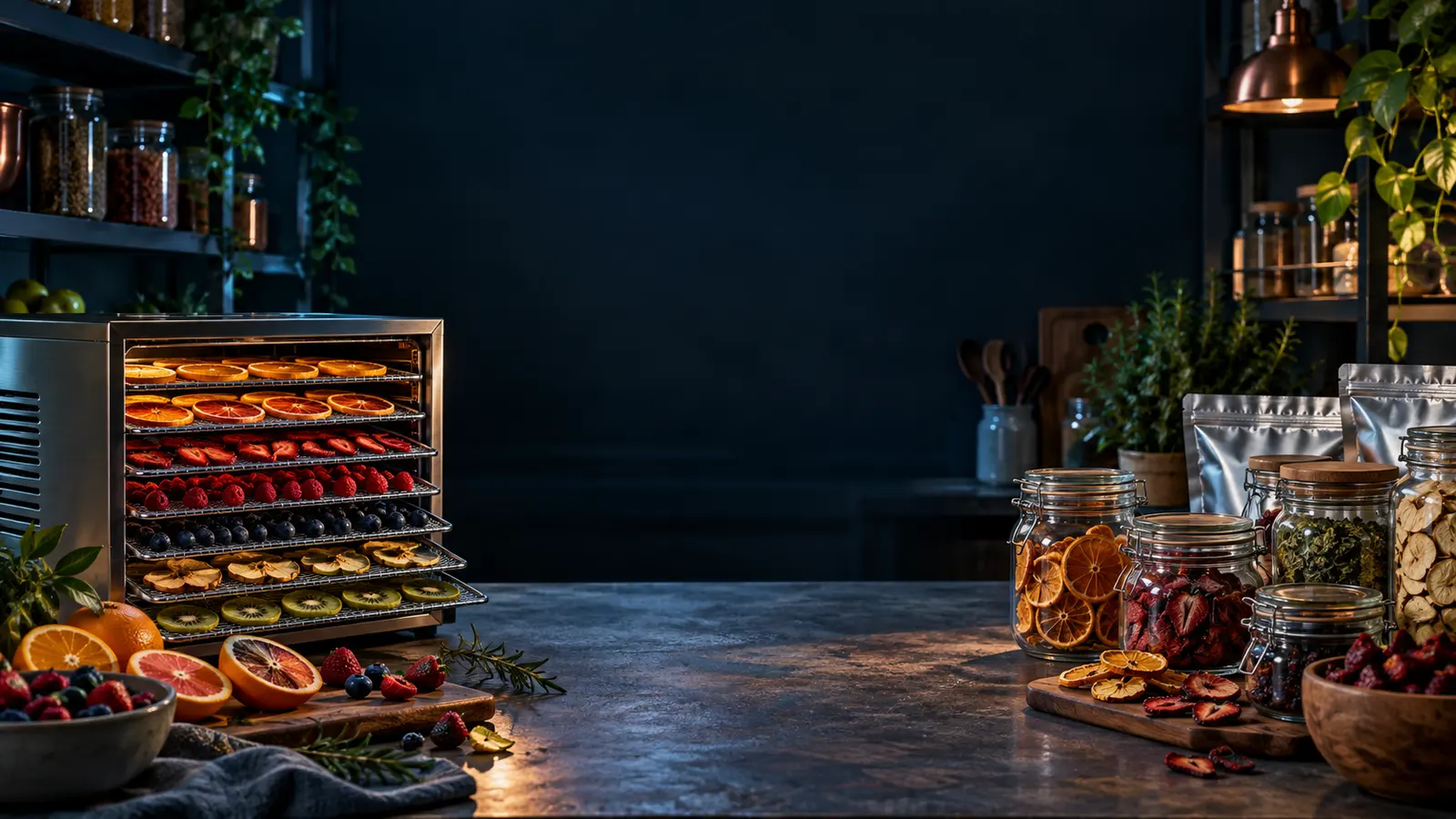
Food Dehydrators, Freeze Dryers and Vacuum Sealers, Compared Clearly
Choose how to dry, seal and store your food. Compare equipment, capacity and limits using published manufacturer specifications.
From the countertop to the pantry: preserve with purpose.
DryFoodLab compares food dehydrators, home freeze dryers, vacuum sealers, freeze-dried meals and long-term storage gear using the numbers each manufacturer publishes. If you are starting out, a stainless steel dehydrator that reaches 160 °F (71 °C) or more covers fruit, vegetables, herbs and safe jerky. A freeze dryer only pays off if you will store a lot of food for years.
Start with what you want to solve
Compare the differences that change your choice before checking an offer.
Dehydrators
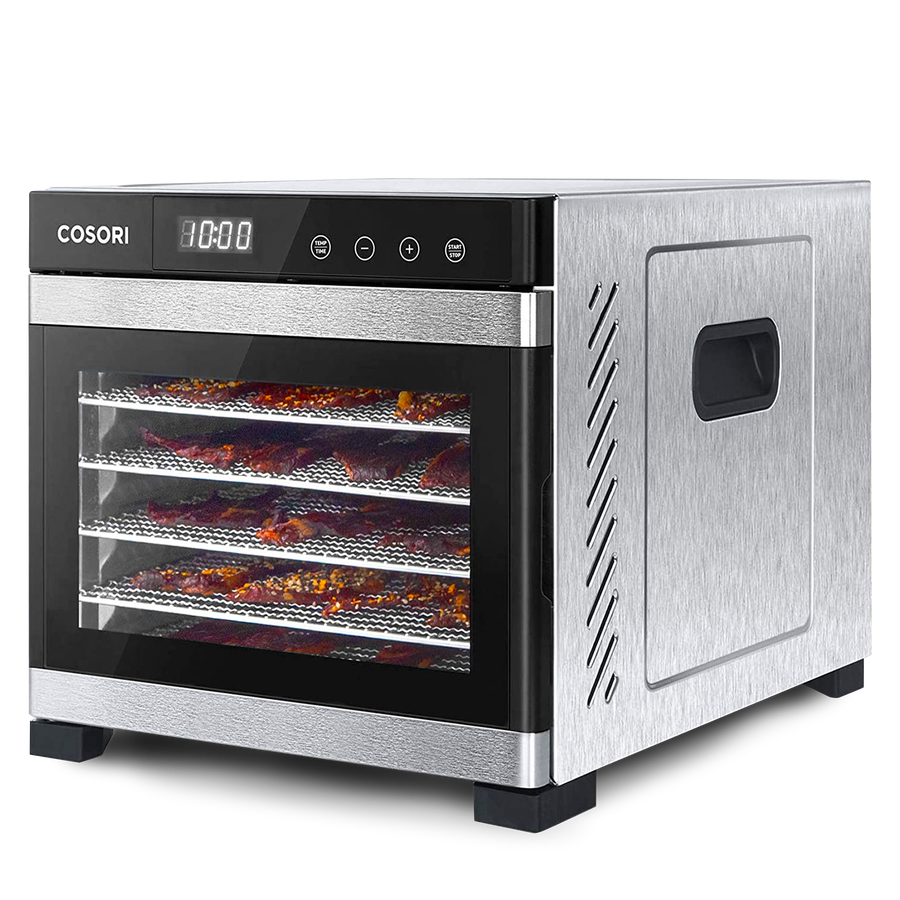
The 8 best food dehydrators of 2026 compared on trays, drying area, temperature and airflow, from a 5-tray compact to a 16-tray dual-zone model.
Compare optionsFreeze dryers
The 5 best home freeze dryers on Amazon in 2026, compared on cold trap, vacuum pump, batch size and weight, plus how to avoid fake listings.
Compare options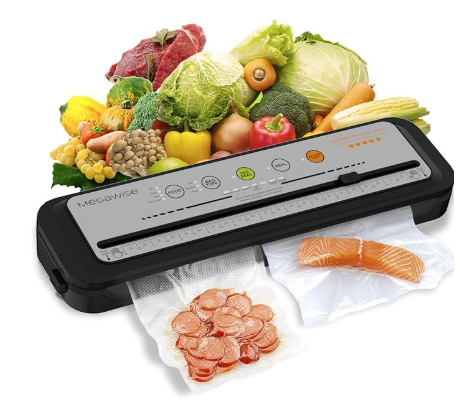
Vacuum sealers
Beelicious Pro VS9313 vs Gasbye VS5166 on official specs: 95 kPa, double seal, moist mode, Pulse, weight and 5-year warranty, with a clear pick for each use.
Compare optionsYour space. Your use. Your priorities.
Explore by category to narrow down models and requirements.
Find your starting point
Each family serves a different need. Start with yours.
Dehydrators
What a food dehydrator does, horizontal vs vertical airflow, the 5 specs that matter and a spec comparison of six models sold in the US.
Explore modelsFreeze dryers
Home freeze dryers explained: vacuum, cold trap and cycle time, how to spot fake listings, why Harvest Right is not on Amazon, and 5 models compared.
Explore modelsVacuum sealers
How a vacuum sealer works, bar vs chamber vs handheld, the 5 specs that matter and a spec comparison of six sealers sold in the US.
Explore models
Food
Freeze-dried vs dehydrated food vs ration bars explained, the 5 things to check on a listing, and six backpacking meals, buckets and bars compared.
Explore models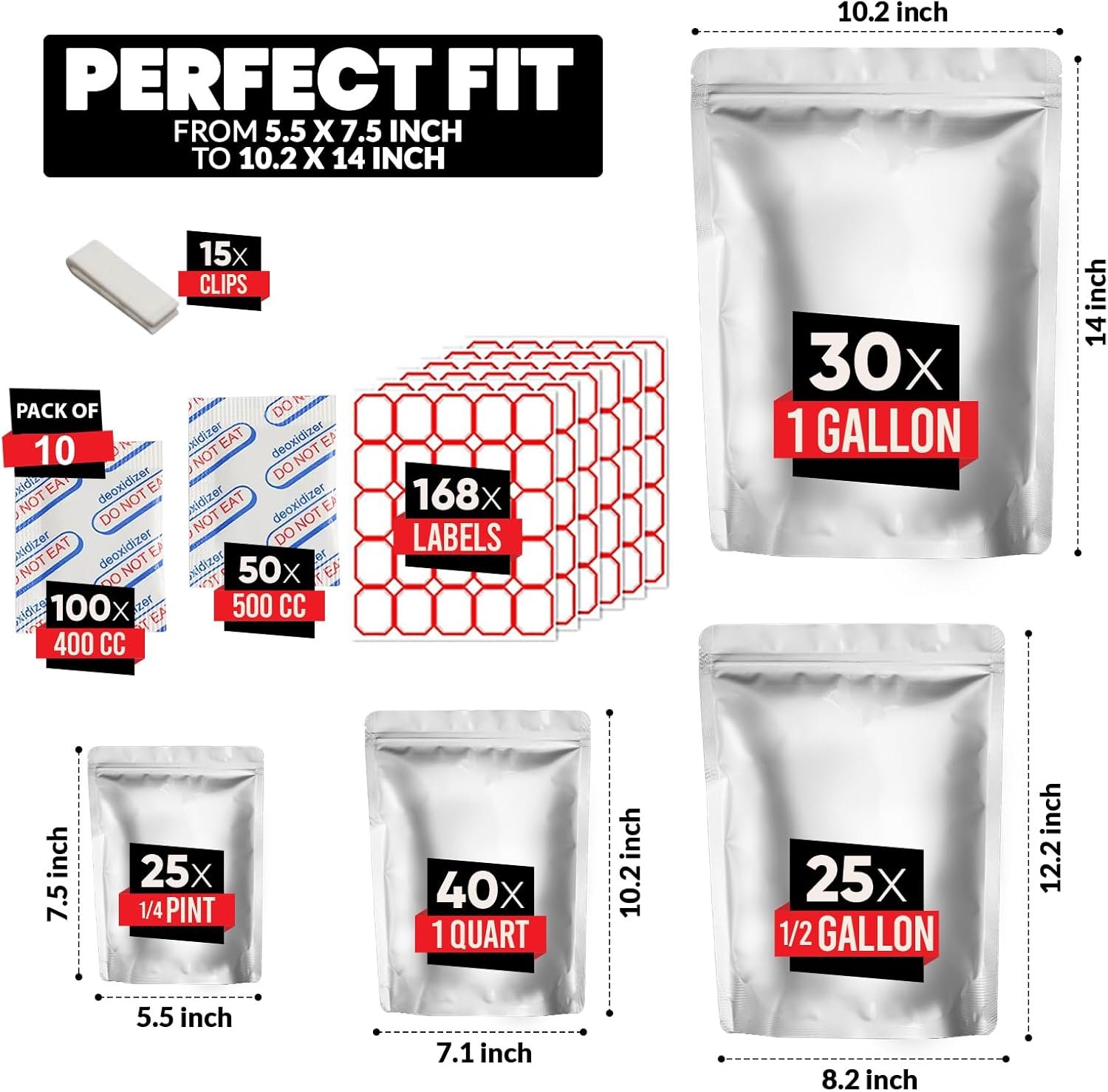
Storage
How long-term food storage works with mylar bags and oxygen absorbers, when to use it and when not, and a spec comparison of five kits and packs.
Explore modelsModels to compare with confidence
Use cases, differences and limits of the selection. Open a profile to decide and the retailer to check current conditions.
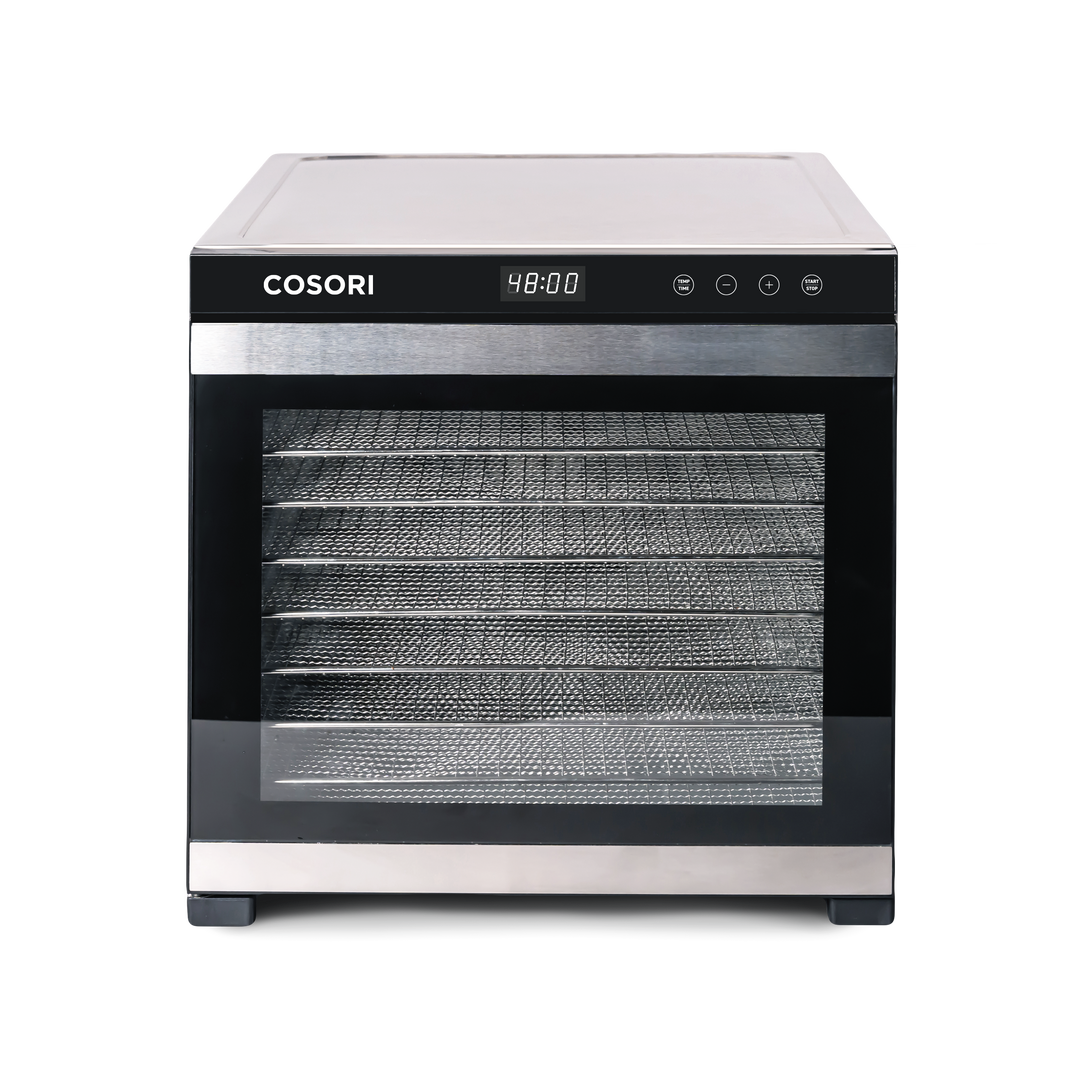
Cosori P101 10-Tray Stainless Steel
Best dehydrator10 trays · 1,000 W · up to 74 °C
10 stainless steel trays, horizontal airflow, 95-165 °F and a 48-hour timer.
The catch: At 35.7 lb (16.2 kg) it needs a permanent spot.
Beelicious Pro VS9313 vacuum sealer 95 kPa
Best vacuum sealer95 kPa
95 kPa, double heat seal, moist mode, accessory port and a 5-year warranty.
The catch: The listing does not publish a maximum bag width.

Beyond Outdoor Meals Chicken Alfredo
Best freeze-dried meal710 kcal
710 kcal and 39 g of protein per pouch, ready in 10 minutes.
The catch: No usable pouch weight or water amount on the listing.
Check the current price, availability, variant and purchase conditions with the retailer.
The method changes what you can preserve.
Dehydrating, freeze drying and vacuum sealing are different processes. Check the equipment, capacity and storage needs before deciding.
Read before choosingUnderstand what really matters
Our methodFood Dehydrator Drying Times and Temperatures Chart (°F and °C)
Food dehydrator drying times and temperatures in °F and °C for fruit, vegetables, herbs and jerky, plus how to tell when food is dry. Guideline ranges.
Read guideHow to Choose a Food Dehydrator: 8 Specs That Actually Matter
How to choose a food dehydrator: drying area, airflow, jerky-safe temperatures, timer, stainless vs plastic trays, noise and cleaning, with examples.
Read guideHow to Dehydrate Fruit: Prep, Lemon Dip, Drying and Conditioning
How to dehydrate fruit in a food dehydrator: prep, lemon juice pretreatment, slice thickness, 131-140 °F guideline, dryness tests and conditioning in jars.
Read guideWhat is DryFoodLab?
DryFoodLab is an independent comparison site about preserving food at home: drying it, freeze-drying it, vacuum sealing it and storing it for years. We read the official Amazon listings, pull out the figures each manufacturer states and put them side by side.
Then we do the math the listing skips: calories per 100 g, energy use per batch, or how many cubic centimeters of oxygen absorber a bag needs. We always show the formula so you can check it.
Dehydrator or freeze dryer?
For most people, a dehydrator. A good one fits on the counter, costs little to run and handles snacks, jerky and seasonal produce.
A freeze dryer makes sense if you want to store complete meals for years or keep the original texture. In exchange, a real freeze dryer weighs over 100 lb (the ZZKD FD-05H lists 138 kg, about 304 lb) and runs cycles of roughly 20 to 40 hours. We run the numbers in freeze dryer vs dehydrator, and you can estimate energy use with the drying cost calculator.
Which guides should you read before buying?
These four prevent the most expensive or most dangerous mistakes:
- How to spot fake freeze dryers: five signs you are looking at a dehydrator in disguise.
- How to make jerky safely: the USDA method step by step.
- 72-hour emergency food: what Ready.gov recommends and how to cover it.
- How many oxygen absorbers you need: the 21% rule with examples.
Which calculators do we offer?
Three free tools, no sign-up:
- Oxygen absorber calculator: cc per bag by bag size and food type.
- Emergency food calculator: food and water for your household by people and days.
- Drying cost calculator: kWh per dehydrator or freeze dryer batch.
How do we review?
Every product gets a DryFoodLab score out of 10 from a public formula: it starts at 5 and adds points for what the listing states, such as stainless steel trays, a -50 °C cold trap or a double seal. Missing data adds nothing. We cover Amazon.com (US); visitors from the UK or Canada are sent to their local store only when we have verified the same product there. We do not physically test products or take payment for placement; see how we review and about us.
Rankings by use
See all- The 6 Best Double Seal Vacuum Sealers of 2026
Six vacuum sealers with dual heat sealing strips, from FoodSaver and Nesco to 95 kPa models, compared on suction, moist mode, port and warranty.
- The 6 Best Vacuum Sealers for Liquids and Wet Food in 2026
The 6 best vacuum sealers for liquids, soups and marinades, all with a moist mode, compared on suction and sensors, plus how to seal wet food without a mess.
- The 6 Best Vacuum Sealers for Mason Jars in 2026
The 6 best vacuum sealers for mason jars, all with an accessory port, compared on suction, hose, modes and warranty, plus how to vacuum seal a jar safely.
- The 5 Best Emergency Food Kits and Buckets of 2026
The 5 best emergency food kits and buckets compared on servings, shelf life and freeze-dried vs dehydrated, with a calculator to size your supply.
- The 5 Best Foods With a 25-Year Shelf Life in 2026
Five emergency foods that claim a 25-year shelf life, compared on servings, weight and method, and which ones are really freeze-dried.
- The 5 Best Freeze-Dried Backpacking Meals of 2026
The 5 best freeze-dried backpacking meals compared on calories, protein, weight and prep, plus how to plan pouches, calories and water for a trip.
Practical guides
See all- How to Choose a Vacuum Sealer: 8 Specs That Actually Matter
How to choose a vacuum sealer: bar vs chamber vs handheld, kPa, double seal, moist mode, embossed bags, rolls, accessory port and warranty, with real examples.
- How to Vacuum Seal Food: Step by Step, Liquids and Safety
How to vacuum seal food step by step: bag prep, sealing liquids, foods that need extra care, botulism risk and what vacuum sealing does to storage life.
- 72-Hour Emergency Food Supply: How Much to Store and What to Buy
How to build a 72-hour emergency food supply: FEMA and EU advice, calories and water per person, a calculator, and kits, meals and ration bars that fit.
- Drying Cost Calculator: Electricity Use of a Dehydrator or Freeze Dryer
Free drying cost calculator: enter watts, hours per cycle, duty and your electricity rate to see kWh and running cost per batch and per month.
- Emergency Food Calculator: How Much Food and Water to Store
Free emergency food calculator: enter people, days and calories to see total kcal, freeze-dried pouches, 2,400 kcal ration bars and water to store.
- Harvest Right Alternatives on Amazon: What You Can Actually Buy
Harvest Right is not sold on Amazon. See the real freeze dryer alternatives on Amazon.com, compatible accessories and the questions to ask before you buy.
Reviews and comparisons
See all- FoodSaver FM2100 Review: Double Seal, Accessory Port, 5-Year Warranty
FoodSaver FM2100 review from the official listing: dual heat strips, accessory port, roll storage, 120 W, 5-year warranty, and the specs FoodSaver leaves out.
- FoodSaver FM2100 vs V4440: Which FoodSaver Should You Buy?
FoodSaver FM2100 vs V4440 on official specs: double seal vs auto moisture detection, handheld sealer, jar accessories, power, weight and warranty.
- FoodSaver V4440 Review: 2-in-1 Sealer With Automatic Moisture Detection
FoodSaver V4440 review: handheld sealer, automatic moisture detection, jar accessories, 128 W and a 5-year warranty.
- Beelicious Pro VS9313 Review: 95 kPa, Double Seal and a 5-Year Warranty
Beelicious Pro VS9313 review from the official listing: 95 kPa dual pump, double seal, Dry, Moist, Pulse and Canister modes, app, 5-year warranty and gaps.
- Beelicious Pro VS9313 vs Gasbye VS5166: Which 95 kPa Sealer to Buy?
Beelicious Pro VS9313 vs Gasbye VS5166 on official specs: 95 kPa, double seal, moist mode, Pulse, weight and 5-year warranty, with a clear pick for each use.
- Beyond Outdoor Meals Chicken Alfredo Review: 710 kcal and 39 g Protein
Beyond Outdoor Meals Chicken Alfredo review from the official listing: 710 kcal, 39 g protein, 10-minute prep, 10-year shelf life, and what is missing.
Troubleshooting and care
See all- Vacuum Sealer Not Vacuuming? Causes and Fixes
Vacuum sealer not pulling air out of the bag? Check for smooth bags, a worn gasket, wrinkles, liquid in the pump path or a dirty drip area, and fix it fast.
- Freeze Dryer Won’t Reach Vacuum? Causes and Fixes
Freeze dryer won’t reach vacuum? Check the door gasket, pump oil, drain valve, hose fittings and a cold pump, with a symptom table and when to claim warranty.
- Freeze-Dried Food Gone Soft or Chewy? Causes and Fixes
Freeze-dried food gone soft, chewy or sticky? It has absorbed moisture. Learn the causes, when to eat or discard it, and how to store it after opening.
- Vacuum Sealer Not Sealing Properly? Causes and Fixes
Vacuum sealer bags losing air or seals peeling open? Fix moisture on the seal area, a dirty or worn heating strip, the wrong seal time and unsuitable bags.
All models
Browse the 54 products in the US catalog, with specifications and links to comparisons.
Open catalogFrequently asked questions
What is the difference between dehydrating and freeze-drying?
A dehydrator dries food with warm air and a fan. A freeze dryer freezes the food and removes the ice with a vacuum pump. Freeze-drying keeps shape, color and flavor better, but the machine is far bigger, heavier and costlier to run.
Are cheap freeze dryers on Amazon real?
Many are not. Plenty of listings titled freeze dryer are hot-air dehydrators with no vacuum pump and no cold trap. A real freeze dryer states a sub-zero condenser temperature, includes a pump and weighs well over 100 lb.
What dehydrator do I need for jerky?
One that reaches at least 158 °F (70 °C). USDA advises heating meat to 160 °F and poultry to 165 °F before drying, then holding the dehydrator at 130-140 °F while it dries.
Do you physically test the products?
We do not physically test them. We analyze the official listings, compare the data and show our math. When a listing leaves something out, we say so. Our method page explains it.
How does DryFoodLab make money?
Through the Amazon Associates program: if you buy through our links, Amazon pays us a commission at no extra cost to you. No brand pays to appear or to rank higher.